
Why Business Failures Are Attributable to AI Assistants
AI assistants are often blamed as the same narrative appears in headlines across industries: “AI is replacing jobs” and “Automation causes layoffs.” These claims spread quickly, inspire fear, and oversimplify a far more complex reality. Although artificial intelligence is frequently portrayed as the antagonist, this portrayal is deeply misleading.
Team leaders of are often deny that AI is the cause of the problem. Disconnected decision-making, subpar execution, and flawed systems are. Jobs are not arbitrarily eliminated by technology. It highlights the weaknesses that are already present in organizations.
At Bheemverse, we collaborate closely with companies implementing business intelligence tools, workflow automation, AI automation, AI assistants, and AI agents. What we consistently see is straightforward but revealing: businesses that experience difficulties after implementing AI were already experiencing difficulties long before AI was introduced. AI exposes dysfunction rather than causing it.
AI in Business: Not a Weapon, But a Mirror
Artificial intelligence functions as a mirror when it is incorporated into business operations, whether it is in sales, customer service, marketing, retail, or data analytics. It displays the true inner workings of an organization.
AI draws attention to unnecessary manual labor, disrupted workflows, data silos, delayed decision-making, and an unhealthy reliance on humans recalling tasks rather than systems handling them. These problems don’t start with AI; they only show up when intelligence is used in operations.
Organizations react to these inefficiencies in two very different ways. Some accept accountability and revamp their systems. Others blame AI, cut staff, and take shortcuts. The leadership response is different, but the technology is the same.
Blind Automation vs. AI Automation
The distinction between intelligent AI automation and blind automation is crucial. Many of the mistakes attributed to AI are actually implementation errors.
When businesses use AI tools without knowing how they work, this is known as blind automation. They replace roles instead of redesigning workflows, rely on fragmented AI platforms, and treat AI as a cost-cutting shortcut This strategy leads to misunderstandings, poor outcomes, and ultimately layoffs, not because of AI, but rather because it is abused.
Intelligent AI automation takes a fundamentally different path. It utilizes AI for automating repetitive work while maintaining human control over decisions. It connects AI assistants, AI agents, and data analytics into a coherent system. Most importantly, it improves execution instead of reducing headcount. This is where AI automation, intelligent agents, and personalized
AI assistants in business drive sustainable growth.
The myth that everyone believes is that an AI assistant, an artificial intelligence personal assistant, or an AI voice assistant is not designed to replace employees. Its real purpose is to remove friction from everyday work.
AI assistants handle repetitive customer queries, support sales teams, improve response efficiency, and reduce burnout by simplifying everyday work. By handling simple tasks, they let employees spend more time using their judgment, being creative, and solving problems.
In high-performing organizations, AI assistants don’t remove people from the system. They multiply human capability and raise the overall quality of work.
AI in Customer Service, Marketing, and Retail: The Real Impact
In the customer service sector, AI (through technologies like chatbots, voice AIs, and conversation AIs) acts to diminish long wait times and provides greater consistency. That being said, human beings are still necessary for compassion, sound judgment, and complicated escalations to higher levels of authority. AI improves the quality of customer service, but does not take the place of human interactions.
In the marketing industry, AI is mainly used to create more personalized campaigns, improve their overall effectiveness through optimization processes, and conduct deep analysis that will allow marketers to understand their market better. The application of AI is not designed to take marketing jobs away from people, but rather to inform marketers so they can conduct their jobs in a smarter way with more efficiency and at a faster pace.
AI and data analytics with AI assistance enable decisions over opinions
AI technologies, as well as data analytics, are transforming the way we make decisions from being opinion-driven to being based on data. Using AI and data analytics, organizations access real-time insights, make predictive decisions, and hold employees accountable across the organization effectively.
Layoffs increase because AI exposes departmental inefficiencies previously overlooked, requiring improved employee efficiency rather than blaming AI. AI is not responsible for the realization of uncomfortable truths but simply enables the recognition of these uncomfortable truths.
“The Future of AI Is One AI that Works Together!”
The Bheemverse view is that AI will be combined into one “tool” rather than having multiple fragmented tools being used by different departments. To this end, the approach taken by Bheemverse was to build an AI ecosystem using AI automation, AI agents, AI assistants, AI workflow automation, AI Business Intelligence, and AI enterprise platforms.
Rather than having multiple “tools” within an organization, Bheemverse has developed a connected system of “building block” AI solutions that align people, processes, and data in a single layer of execution. The fundamental principle of the Bheemverse System is simple and clear: AI should eliminate chaos, not people.
Grow your business without destroying jobs using AI assistants
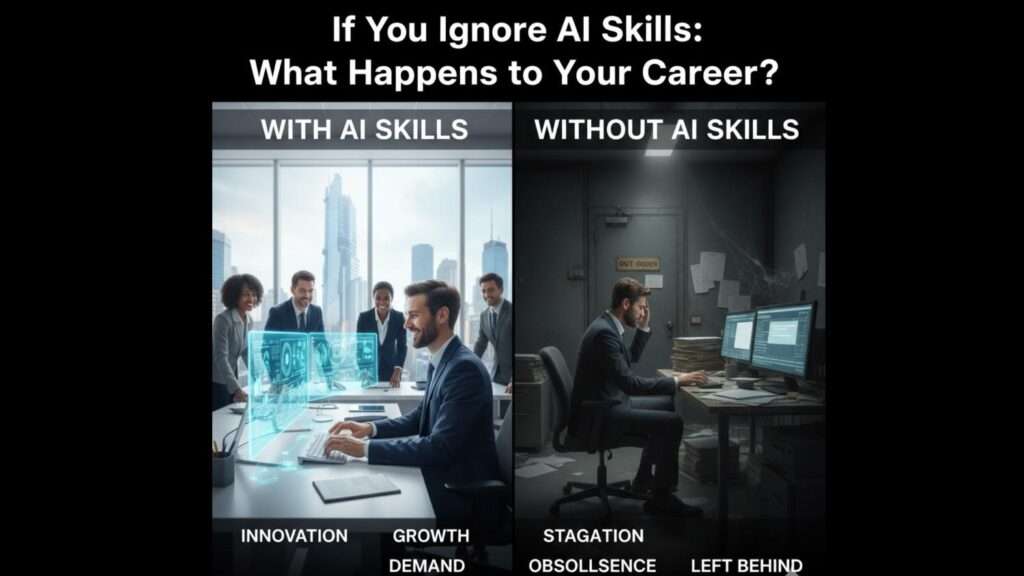
Enterprises using AI technology and AI platforms achieve very different growth outcomes compared to those that do not adopt AI. They create AI operations roles, accelerate delivery across departments, improve customer experience, and achieve sustainable growth without employee burnout.
This is why the leading AI companies, both within India and globally, have chosen to focus on augmenting the workforce rather than eliminating jobs. They use AI to augment their teams rather than reducing them.
Why Do Layoffs Happen?
When an organisation states that due to AI it has had to reduce staff, unfortunately, this statement is often meant to imply that “we did not take into consideration the redesign of workflows, systems, or leadership model”. AI didn’t cause the issue; organizations failed to redesign systems, leaving them forced to reduce staff instead.
Business futures utilizing artificial intelligence through AI Assistants
Artificial intelligence (AI) and the future of artificial intelligence for business will come down primarily to the way businesses utilize AI technologies in their operations. In order to be competitive in the marketplace, businesses need to implement AI effectively and efficiently in their operations.
Organizations using intelligent agents, AI automation, personalized AI, and workflow automation are efficient, faster, effective, and succeed now and future. The Companies that do not use AI to its full potential will continue to fail in leadership and will continue to blame technology.
Stop blaming AI! Make Changes to Your Business Operations
AI is not the enemy of jobs. It’s the enemy of inefficient work processes. Successful organizations use AI intelligently, prioritize systems over shortcuts, and empower employees with AI instead of replacing them.